
Regulatory Designations US FDA & EMA Insights Corner
- Home
- Blog Standard
- Insights Corner
- Regulatory Designations US FDA & EMA Insights Corner
Insights Details
Month: May 26
Tags: RegulatoryAffairs, FDADesignations, EMA, OrphanDrugDesignation, BreakthroughTherapy, FastTrack, PriorityReview, RMAT, DrugDevelopment, PharmaStrategy, RareDisease, ClinicalDevelopment, RegulatoryIntelligence, LifeSciences, PharmaConsulting, 2026RegulatoryReforms, OctavusConsulting, InsightsCorner
Let’s Work Together for Development
Call us directly, submit a sample or email us!
Business Address
First Floor, B-66, Sector 63,
Noida, UP, India-201301
Noida, UP, India-201301
Connect With Us
Call us: +91 87500 88882
bd@octavusconsulting.com
bd@octavusconsulting.com
Working Hours
Mon - Fri: 10.00 AM - 07.00 PM
Holidays : Closed
Holidays : Closed
About topic:
This deck examines how US FDA and EMA regulatory designations have evolved into a core strategic lever for drug development, rather than a procedural formality. With standard development timelines stretching 8-9 years, designations such as Orphan Drug Designation, Breakthrough Therapy, Fast Track, Priority Review, RMAT, and EMA’s PRIME provide the regulatory flexibility, expedited review, and commercial incentives needed to bring targeted and rare-disease therapies to patients faster.
The deck maps the full designation landscape across both agencies, compares their differing data and evidentiary expectations, and quantifies the real-world impact of designations through 2025 FDA approval data, grant and approval trend analysis, and a company-level case study of Pfizer’s designated pipeline. It closes with a forward look at 2026 regulatory reforms reshaping rare disease, PRIME, and emerging psychedelic therapy pathways, equipping pharmaceutical and biotech teams with a clear, data-backed framework for sequencing designation strategy across global markets.
Regulatory Designations US FDA & EMA Insights Corner
Highlights:
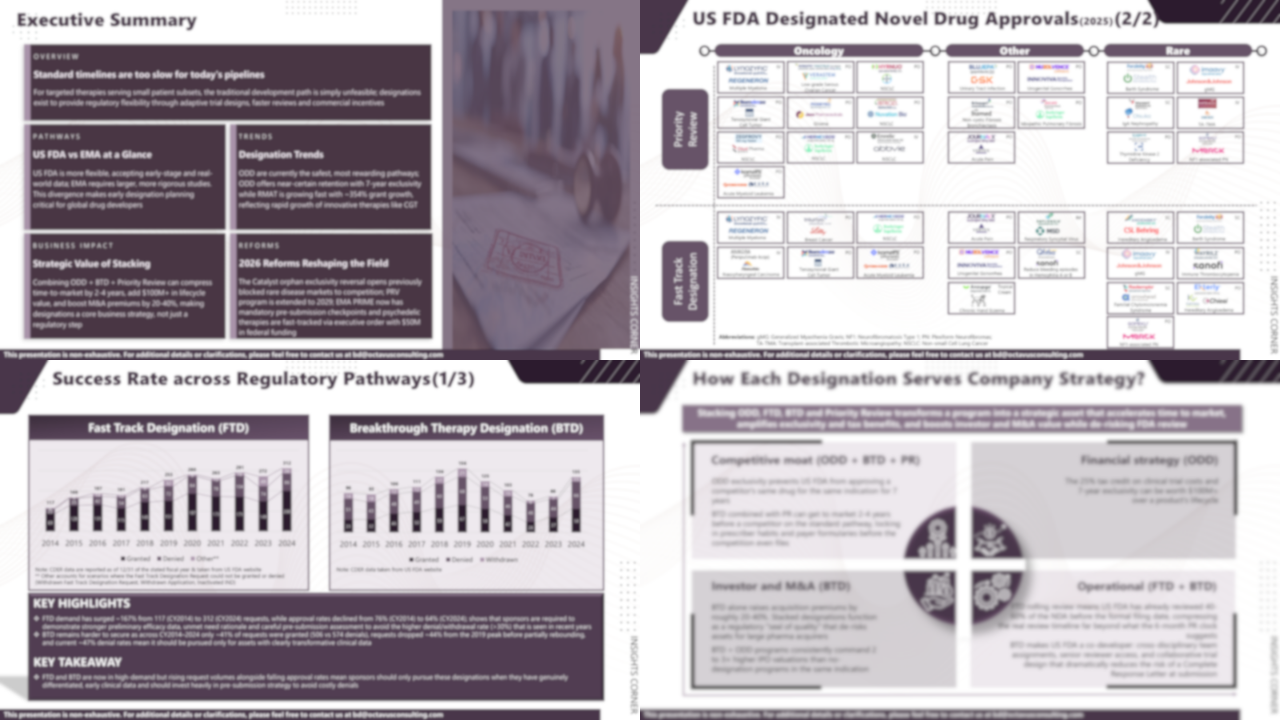
Designation stacking can compress time-to-market by 2-4 years; combining ODD, BTD, and Priority Review creates a competitive moat, locking in prescriber and payer adoption well ahead of competitors on the standard pathway
Orphan Drug Designation is now the highest yield, lowest-risk strategy in pharma; grants surged roughly 106% over the past decade while withdrawal rates collapsed, reflecting near-certain retention and 7-year market exclusivity
RMAT designation has grown ~354% in the past decade, making it the fastest-expanding expedited pathway, signaling where regulatory momentum is heading for cell and gene therapies
2026 marks a structural shift in global regulatory policy including the Catalyst orphan exclusivity reversal, PRV program extension, mandatory EMA PRIME checkpoints, and new fast-track provisions for psychedelic therapies
Interested in the presentation? Download Here
Interested in the presentation? Download Here

Shubham Verma is a Pharma Analyst specializing in secondary research, competitive intelligence, and strategic analysis across multiple therapeutic areas. Experienced in deriving actionable insights from clinical, regulatory and market data, with expertise in conference intelligence across ASH, EAN, EULAR, and the JPM Healthcare Conference, investor reporting, news analysis, and therapy-area landscape and market outlook assessments.